
The Observation: The Fragmentation Problem
The current state of AI agent interoperability is a mess of bespoke APIs. If you want Claude to interact with Google Calendar and ChatGPT to interact with Notion, developers are often forced to write unique integration layers for every tool and every model. This lack of a standard has created a high barrier to entry for enterprise-grade AI assistants. We observed that most teams are spending 80% of their time on 'glue code' and only 20% on the actual AI logic, much like the environment discussed in our AI IDEs for Enterprise: Kiro vs Cursor Strategic Guide.
The Model Context Protocol (MCP) aims to reverse this. It provides a standardizing AI integrations framework to connect AI applications to external systems—including data sources like local files and databases, tools like search engines and calculators, and even complex workflows. By acting as a universal interface, it allows a single MCP server to provide capabilities to any AI client that speaks the protocol. The discovery of this protocol represents a shift from building siloed integrations to building an interoperable ecosystem.
The Analysis: Why MCP is the 'USB-C Moment' for AI
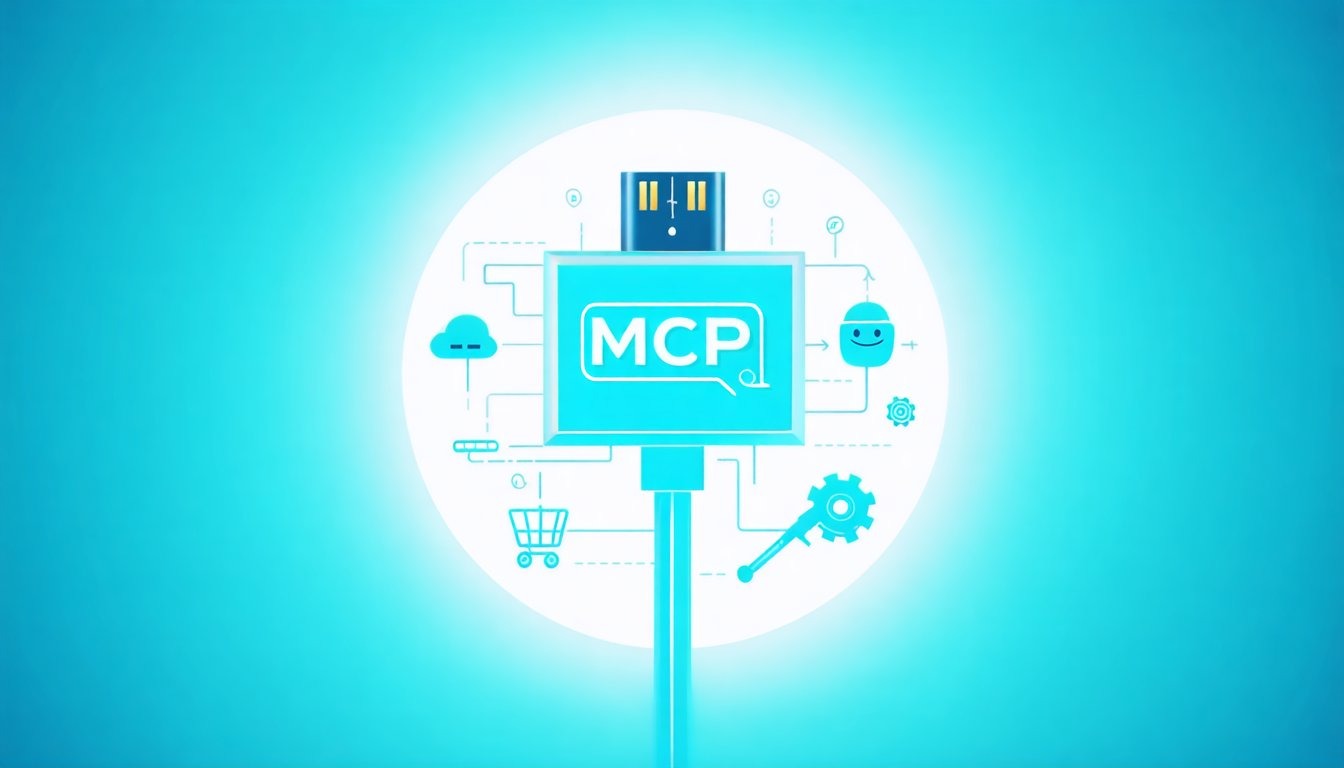
Think back to the days before USB-C. You needed different cables for your phone, your laptop, and your camera. MCP is doing for AI agents what USB-C did for hardware. It creates a unified architecture where Servers expose data and tools, and Clients (the AI applications) consume them without needing to know the underlying implementation details.
What This Enables in Practice
In our testing, we found that MCP unlocks scenarios that were previously too complex for quick deployment. Some of the most compelling use cases we identified include:
- Design-to-Code Workflows: Using Claude Code to pull a design directly from Figma and generate a functional web application in real-time.
- Deep Data Analysis: Enterprise chatbots that can securely connect to multiple disparate databases (SQL, Vector, or NoSQL) across an organization to answer complex business intelligence questions.
- Physical World Interactivity: AI models creating 3D designs in Blender and sending them directly to a 3D printer via a standardized MCP tool interface.
- Personal Productivity: Agents with permissioned access to Google Calendar and Notion, acting as a high-fidelity executive assistant, achieving the kind of scale seen in our Business Incubation / Entrepreneurship Education Case Study.
The Enterprise Hurdle: Security and Trust
While the 'cool factor' of these integrations is high, the enterprise reality is often governed by fear. Most CTOs we speak with want agents connected to their CRM or Jira, but they are terrified of token leaks and over-permissioning. A rogue agent with an all-access token to a production database is a nightmare scenario.
Our analysis suggests that MCP’s real value for the enterprise isn’t just the connection—it’s the security patterns it encourages. To establish secure AI workflows, we are implementing several critical layers inspired by our Enterprise Software / Data Privacy & Compliance Case Study:
- OAuth Resource Indicators: This prevents 'token mis-redemption.' It ensures that a token intended for a specific tool or resource cannot be hijacked and used elsewhere by the agent.
- Least-Privilege Scopes: Instead of giving an agent 'Admin' access to Jira, we use MCP to define granular permissions where the agent can only read specific tickets or comment on certain threads.
- Audit Logging: Because MCP standardizes the communication layer, it becomes significantly easier to log exactly what data the model requested and what actions it took, providing a clear trail for compliance teams.
"Agents are only truly useful when they can do things—MCP is the framework that allows them to do those things safely and at scale."
The Technical Deep Dive: Building for Reliability
Building an MCP server requires shifting your mindset from 'API design' to 'capability design.' Developers create servers to expose their data and tools, while clients develop the logic to connect to these servers. This decoupling means that as a developer, you only have to build your tool once. Whether the user is using Claude, ChatGPT, or a custom internal LLM, your tool remains functional.
We have been testing the MCP Inspector and various SDKs provided by the community. One surprise was how much it reduces development complexity for a modern autonomous agent framework. By utilizing a standardized protocol, you eliminate the need to constantly update your prompts to explain how to use a specific tool; the protocol handles the schema and the expectations, allowing the model to understand the tool's parameters more natively. This reliability is critical, which is why we recommend Citation-First RAG Systems: Building Safe Enterprise AI as a benchmark for data integrity.
The Takeaway: Start with Strategy, Not Just Code
MCP is rapidly becoming the standard for agent tool integrations, and for good reason. It solves the fragmentation problem while providing the hooks necessary for enterprise security. However, it is not a 'magic wand.' Effective implementation requires a clear architecture that prioritizes security checklists and auditability alongside raw capability.
Our recommendation for teams looking to dive in: Start by identifying your most manual 'data-retrieval' tasks and build a small, secured MCP server to handle them. The efficiency gains are immediate, but the long-term value lies in building an infrastructure that is ready for the next generation of autonomous agents. We are currently developing an MCP Integration Starter Pack to help teams bridge this gap without sacrificing security.