
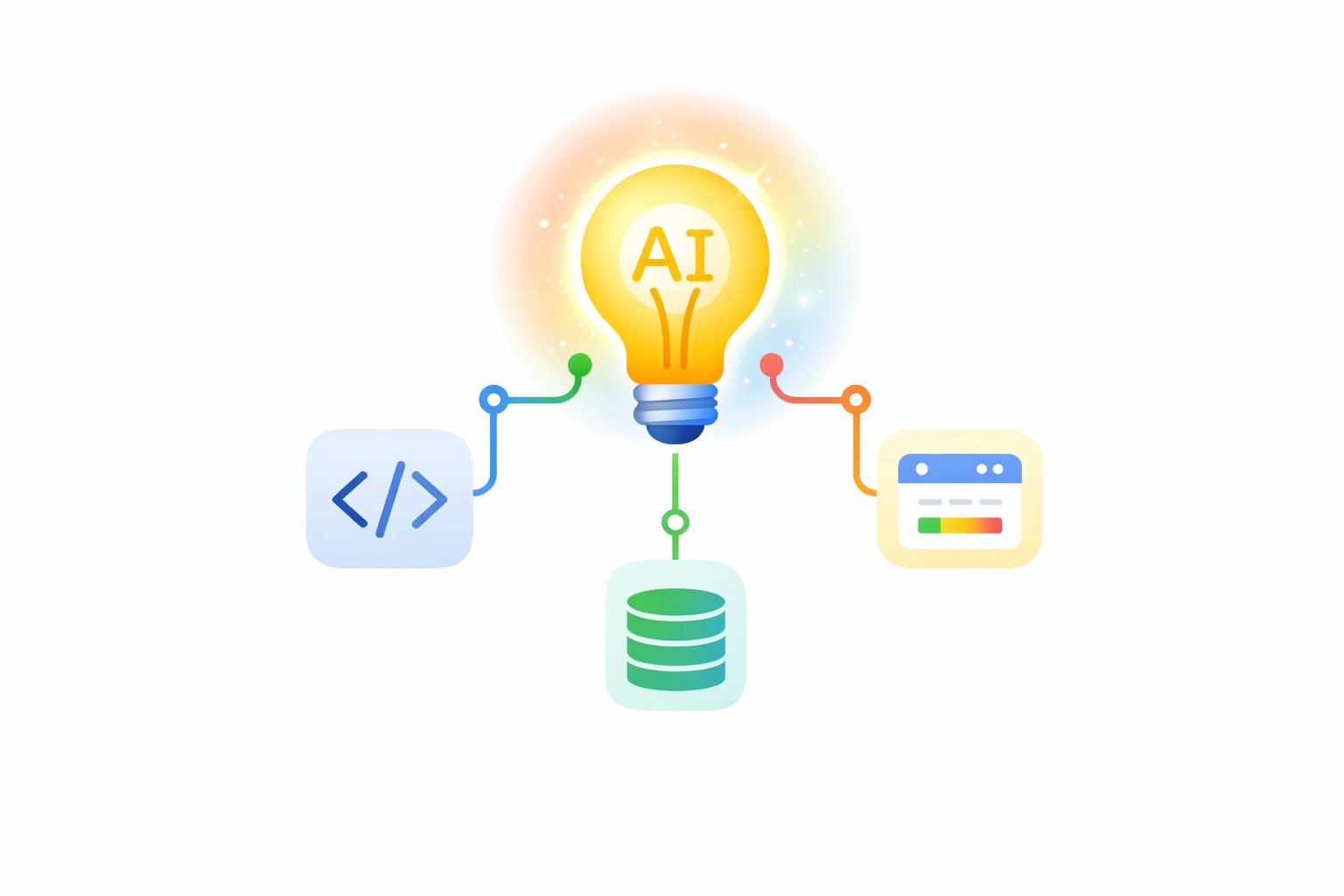
The pace of AI development has moved from monthly milestones to weekly shifts. Just days after the release of Gemini 3 Deep Think, Google has already rolled out its successor to the general developer and enterprise audience: Gemini 3.1 Pro. This isn't just a minor version bump; it is an overhaul of the core intelligence that powers the entire Gemini ecosystem. We've been tracking the performance of the Gemini 3 series closely at EnDevSols, and the move to 3.1 suggests that Google is doubling down on reasoning capabilities and tool-use efficiency as the primary battlegrounds for 2026. For organizations evaluating the broader landscape, our Enterprise AI Software Engineering: Claude, GPT & Gemini guide provides deeper context. Along with this, the release of Nano Banana 2 (the updated Gemini 3.1 Flash Image model) signals a significant shift in how multimodal models handle high-speed generation alongside complex problem-solving.
The Reasoning Leap: Beyond Simple Pattern Matching
For a long time, the critique of large language models (LLMs) was that they were excellent at mimicry but struggled with novel logic. Google is directly addressing this with Gemini 3.1 Pro. The most striking metric shared is the performance on the ARC-AGI-2 benchmark. This specific test is designed to evaluate a model's ability to solve entirely new logic patterns that it hasn't encountered in its training data.
Gemini 3.1 Pro achieved a verified score of 77.1%, which is more than double the reasoning performance of its predecessor, Gemini 3 Pro. From a technical perspective, this suggests a fundamental shift in how the model handles internal weights during the 'thinking' phase. For engineers, this translates to better handling of 'if-this-then-that' scenarios in code and more reliable outputs when the model is asked to navigate ambiguous requirements.
Applying Intelligence to Complex Systems
What does this 77.1% score look like in practice? We’ve observed that the model is significantly better at what we call System Synthesis. In one demonstration, the model was able to bridge the gap between complex, raw telemetry APIs and a user-friendly frontend by building a live aerospace dashboard. It successfully configured a public telemetry stream to visualize the International Space Station’s orbit in real-time. This requires the model to not only write code but to understand the structure of an external API it isn't necessarily 'hard-wired' to know, then reason through the data mapping required to make that data visual.
Creative Coding and the End of Pixel-Based Assets
One of the more fascinating discoveries in the Gemini 3.1 Pro update is its proficiency in code-based animation. Traditional AI image generators produce pixels—static or moving—which are heavy and non-scalable. Gemini 3.1 Pro is leaning into generating website-ready, animated SVGs directly from text prompts.
By generating pure code rather than video files, the model offers several advantages for developers:
- Infinite Scalability: Because it is vector-based code, these animations remain crisp on any screen size, from a mobile device to an 8K display.
- Minimal Latency: File sizes are a fraction of traditional video or GIF formats, which is a massive win for web performance optimization.
- Interactivity: Since the output is code, it can be easily hooked into user events (like hover or click) within a React or Vue environment.
We also saw this applied in 'sensory-rich' interfaces, where the model coded a 3D starling murmuration that shifts its generative score and movement based on hand-tracking data. This isn't just 'writing a script'; it is the model understanding the relationship between spatial math, visual rendering, and audio synthesis.
The Enterprise Context: Tool Use and Agentic Workflows
Google is rolling this out through Vertex AI and their new agentic development platform, Google Antigravity. This indicates a move away from 'Chatbots' toward 'Agents,' aligning with the broader trend of AI Agents for Enterprise: Scaling an AI-First Workforce. The 3.1 Pro model is specifically tuned for better tool use—the ability of the model to call functions, browse the web, and interact with private databases without 'hallucinating' the syntax.
"3.1 Pro is designed for tasks where a simple answer isn’t enough. It bridges the gap between complex APIs and user-friendly design."
For businesses currently choosing between Gemini, Claude, and OpenAI, the decision often comes down to Model Fit. While Claude 3.5 Sonnet has been a favorite for many developers due to its coding nuance, Gemini 3.1 Pro is making a strong case for its place in the enterprise stack, particularly for those already invested in the Google Cloud/Workspace ecosystem. The integration with NotebookLM—which is now exclusive to Pro and Ultra users—further emphasizes its use as a research and synthesis powerhouse.
Comparing the Landscape
When we look at the current market, here is how Gemini 3.1 Pro differentiates itself:
- Vs. GPT-4o: Gemini 3.1 Pro seems to excel in long-context window tasks (like analyzing entire repositories) and direct integration with Google-specific data streams.
- Vs. Claude 3.5: While Claude remains highly 'human' in its prose, Gemini 3.1 Pro’s reasoning on ARC-AGI-2 benchmarks suggests it may have the edge in pure logic and mathematical synthesis.
- Multimodality: The launch of Nano Banana 2 (Gemini 3.1 Flash Image) provides a high-speed counterpart for visual tasks, allowing for a 'MoE' (Mixture of Experts) approach where the Pro model handles the logic and the Flash model handles the heavy lifting of generation.
Early results from our internal testing look incredibly promising, especially for projects requiring complex data visualization and agentic function calling. If you are building workflows that require more than just text generation—specifically those involving real-time data or complex code synthesis—Gemini 3.1 Pro is a mandatory test. We recommend starting in the Gemini API via Google AI Studio to validate your specific use cases before moving to a full Vertex AI deployment. The reasoning era of AI is officially here, and the gap between 'knowing' and 'doing' is closing faster than ever.