
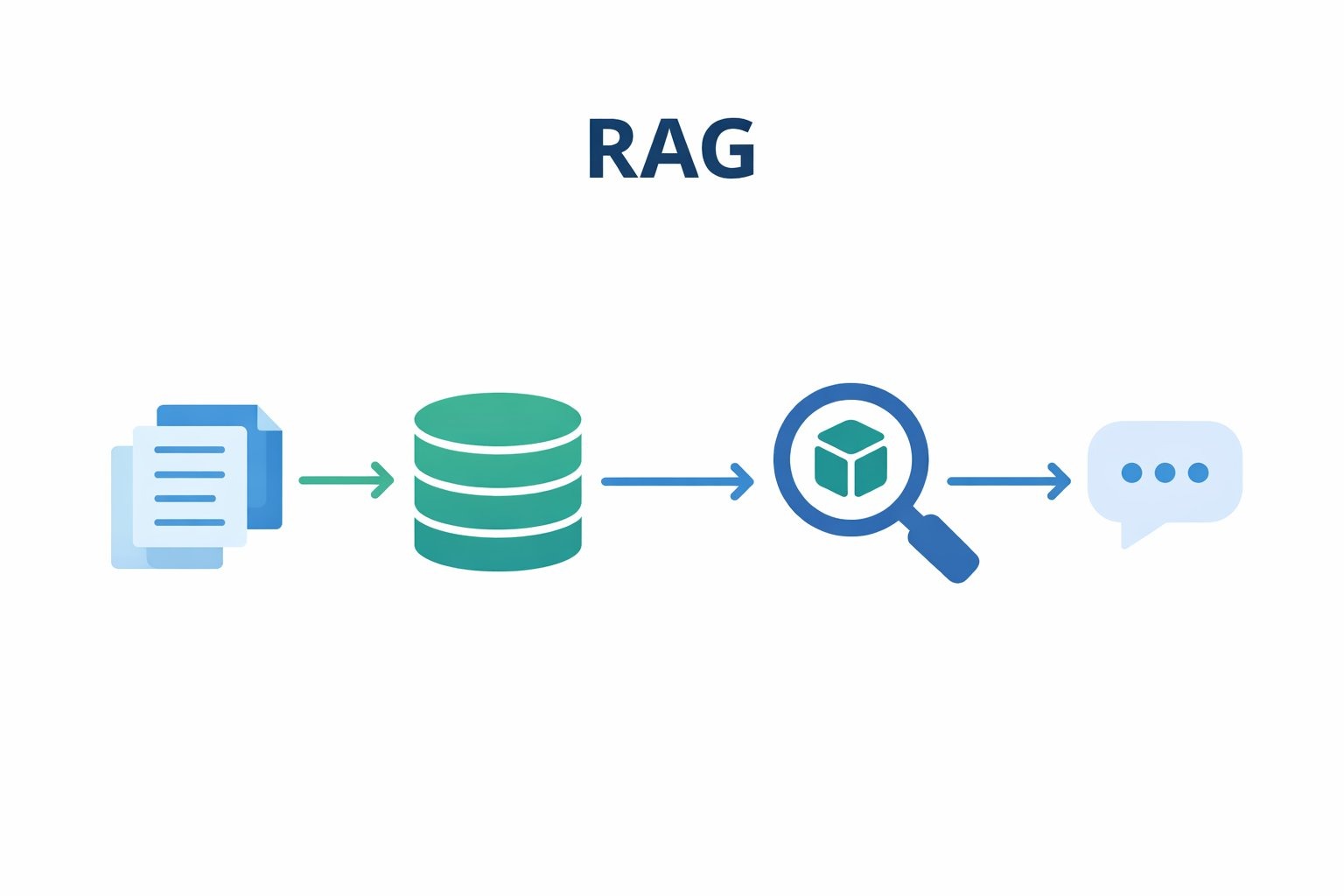
For the modern CTO, the transition from a successful Retrieval-Augmented Generation (RAG) prototype to a production-grade system is often the steepest curve in the AI journey. While a basic RAG setup can be built in an afternoon, the gap between a "cool demo" and an enterprise-ready system—one that is factually grounded, low-latency, and observable—is significant. Achieving a successful Production RAG Implementation requires more than just code; it demands a strategic roadmap. This guide provides a battle-tested, 30-day plan to bridge that gap, moving from raw data preparation to a rigorous, multi-dimensional evaluation framework.
The Technical Imperative
In the enterprise, the cost of hallucination is not just a technical bug; it is a brand and legal risk. RAG remains the premier architectural pattern for grounding Large Language Models (LLMs) in proprietary data, yet many teams fail because they treat RAG as a static pipeline rather than a continuous optimization loop. A production-ready RAG system requires a shift from 'vibe-based' testing to systematic, metric-driven validation within a structured RAG architecture. Solving this allows engineering leaders to deploy AI with confidence, knowing the system's output is justified by the source material.
Prerequisites & Architecture
Before initiating the 30-day sprint, your engineering team must have a firm grasp of the modern AI stack. This implementation utilizes LangChain for orchestration and LangSmith for tracing and evaluation. Key architectural requirements include:
- Vector Database Selection: Whether using managed solutions or in-memory stores like InMemoryVectorStore for rapid prototyping, ensure your vector database strategy supports metadata filtering.
- Embedding Strategy: Standardize on high-dimensional embeddings (e.g., OpenAI's text-embedding-3-small or larger) to maintain semantic precision.
- Observability Layer: A tracing backend (like LangSmith) is non-negotiable for debugging the chain of thought and retrieval steps.
The Blueprint: Decoupled Intelligence
A robust RAG architecture must decouple the Indexing, Retrieval, and Generation phases. This separation allows for independent optimization: you can refine your chunking strategy (indexing) without changing your prompt (generation), or upgrade your LLM without re-indexing your entire corpus. The goal is to create a 'traceable' pipeline where every component's output is measurable against a specific input.
Phase-by-Phase Execution
Phase 1: Foundation & Knowledge Indexing
Day 1-7 focuses on the 'Knowledge Indexing' pipeline. Use tools like WebBaseLoader to ingest disparate data sources and utilize a RecursiveCharacterTextSplitter. A critical decision here is chunk size and overlap; for technical documentation, a chunk size of 250 with zero overlap is often a clean starting point, though this should be tuned based on the semantic density of your data. The goal of this phase is to transform raw URLs or documents into a queryable vector store using advanced semantic search techniques.
Phase 2: Core Logic & Retrieval Patterns
Day 8-15 involves building the generative pipeline. Implement a retrieval component that fetches the top k most relevant documents (e.g., k=6). For advanced implementations, Building Agentic RAG Systems can offer superior reasoning capabilities. The generative prompt should be strict: instruct the LLM to 'use three sentences maximum' and 'if you don't know the answer, say you don't know.' This phase requires wrapping your functions in decorators like @traceable() to ensure every retrieval event is captured for future audit.
Phase 3: Systematic Evaluation & The 'LLM-as-Judge'
Day 16-24 is the most critical phase: building a comprehensive LLM evaluation framework. You must move beyond simple keyword matching to LLM-as-a-judge evaluators. Create a 'Golden Dataset' containing curated questions and reference answers. In our Enterprise Software Case Study, we demonstrate how this rigor leads to 95% faster search efficiency. Implement four key evaluators:
- Groundedness: Does the answer hallucinate, or is it supported by the retrieved facts?
- Relevance: Does the student answer actually address the user's question?
- Correctness: How does the answer compare to the ground-truth reference?
- Retrieval Relevance: Are the documents being pulled actually related to the query?
Phase 4: Production Optimization & Scaling
In the final week, optimize for latency and cost. Implement structured output using json_schema to ensure your evaluators return parseable, actionable data. Use experiment prefixes to track different versions of your RAG chain (e.g., testing GPT-4o vs. GPT-4-Turbo) and analyze results using dataframes to identify exactly where the retrieval or generation is failing.
Anti-Patterns & Mitigation
"The biggest mistake in RAG is ignoring the retrieval quality and trying to fix the prompt instead."
Avoid the 'Large Chunk Fallacy'—overloading the LLM with too much context can lead to 'lost in the middle' phenomena. To improve reliability, consider Building Citation-First RAG Systems to ensure every claim is backed by source material. Mitigation involves using structured output schemas for graders to force them to 'think' through an explanation before providing a boolean correctness score. This prevents the grader itself from hallucinating.
Performance Engineering
Optimization is not a one-time event. For high-throughput systems, implement asynchronous retrieval and consider small-to-big chunking, where small chunks are used for retrieval but larger parent contexts are sent to the LLM. Monitor your 'p99' retrieval latency and ensure your vector store indexing is part of a CI/CD pipeline, not a manual process.
Production Readiness Standards
To move from MVP to Enterprise Grade, your system must meet these criteria:
- 95% Groundedness Score: Every answer must be verifiable by the provided context.
- Automated Regression Testing: Every deployment must run against the Golden Dataset.
- Cost Transparency: Track token usage per retrieval and generation to avoid runaway expenses.
- Semantic Fallback: The system must gracefully handle 'out of distribution' questions it cannot answer.
Building a Production RAG Implementation is a journey from uncertainty to precision. By following this 30-day framework and focusing on automated, multi-dimensional evaluation, engineering leaders can turn LLMs from unpredictable chatbots into reliable enterprise assets. To help your team get started, we've developed a comprehensive RAG Evaluation Template to track your metrics and accelerate your deployment timeline.