
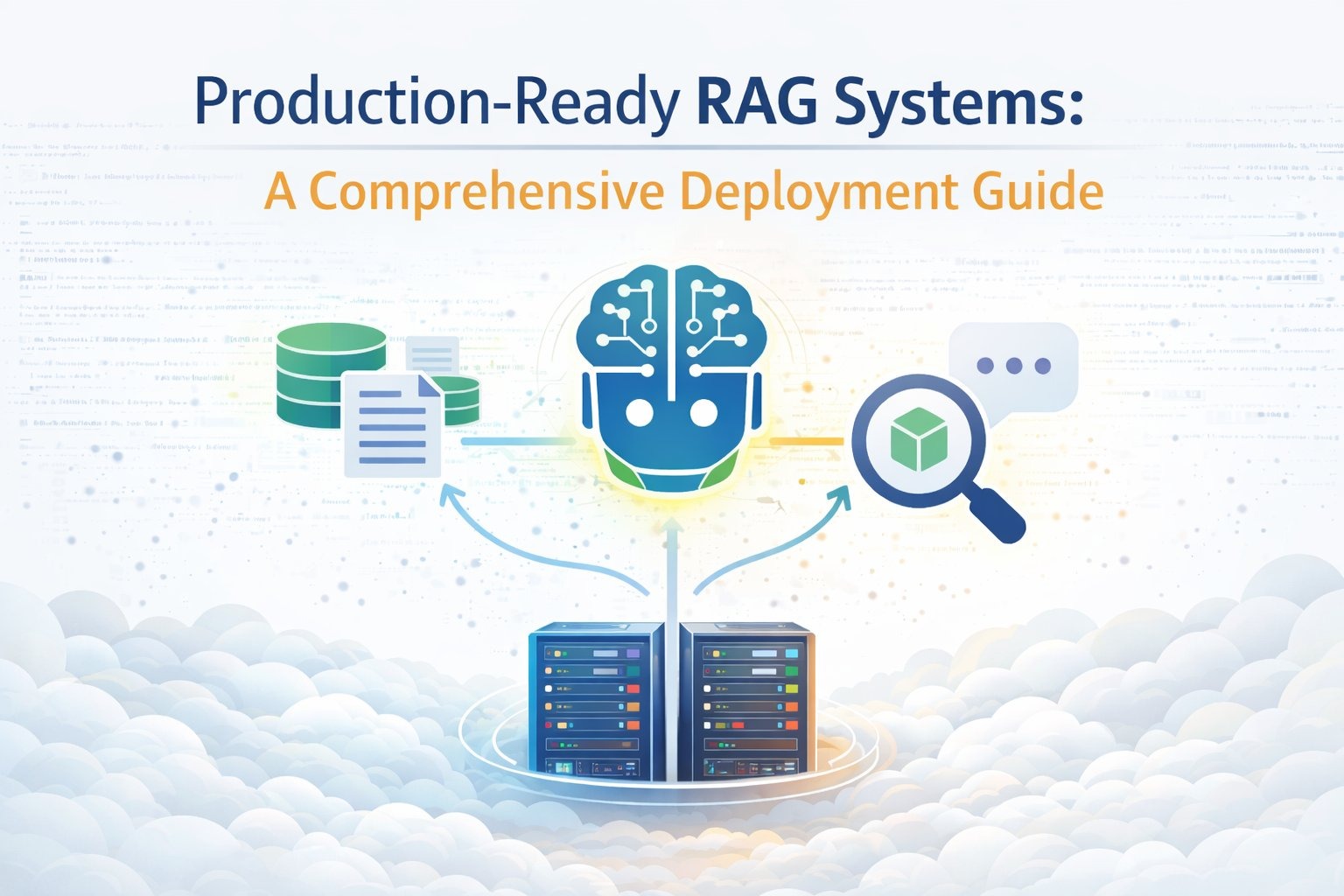
In the current landscape of generative AI, the distinction between a technical curiosity and production-ready RAG systems is defined by grounding. While Large Language Models (LLMs) demonstrate remarkable linguistic capabilities, their inherent lack of access to real-time, proprietary data—and their tendency to hallucinate with confidence—presents a significant barrier for enterprise adoption. Retrieval-Augmented Generation (RAG) has emerged as the architectural solution to this problem, providing a mechanism to reference authoritative external knowledge before generating a response. However, as organizations move beyond simple wrappers, understanding RAG vs. Fine-Tuning vs. Prompting: 2026 Strategic Guide clarifies why the engineering complexity of building reliable, secure, and performant RAG systems becomes the primary challenge for technical leadership.
The Technical Imperative: From Stochastic Parrots to Authoritative Systems
For CTOs and VPs of Engineering, the business value of RAG lies in transforming an LLM from a generalist into a specialist that understands your specific business context. A basic chatbot might satisfy a general query, but an enterprise requires document-aware answers, strict role-based access control (RBAC), and verifiable citations. The technical imperative is to bridge the gap between static model training and the dynamic, heterogeneous data environments typical of modern enterprises. By implementing a custom enterprise RAG implementation, following a Production RAG Implementation: 30-Day Enterprise Guide ensures you move from probabilistic guessing to deterministic retrieval, significantly reducing hallucination risks and increasing the trust-factor of AI-driven decisions.
Prerequisites & Architectural Foundations
Before initiating a RAG project, technical leads must establish a robust foundation. This includes selecting a high-performance vector database (such as Pinecone, Weaviate, or Milvus), choosing an embedding model appropriate for the domain (e.g., text-embedding-3-small or specialized HuggingFace models), and ensuring your engineering team is proficient in semantic search paradigms. Crucially, your architecture must account for the Multi-Source Retrieval challenge: the ability to ingest data from diverse repositories like SharePoint, Confluence, S3 buckets, and SQL databases while maintaining a unified index.
The Blueprint: Designing for Precision and Trust
The goal of a custom RAG system is not just to find information, but to find the right information and present it within the context of the user’s specific permissions. The blueprint for an enterprise system involves four primary components:
- Data Ingestion & Transformation: A pipeline that handles PDF parsing, table extraction, and metadata enrichment.
- Vector Retrieval Logic: Implementing hybrid search (combining semantic vector search with traditional keyword-based BM25) to ensure high recall.
- Context Re-ranking: Using cross-encoder models to re-evaluate the relevance of retrieved chunks before passing them to the LLM.
- Generation with Citation: A prompt engineering layer that mandates the model only use provided context and explicitly cite its sources using unique document identifiers.
Phase-by-Phase Execution: A Roadmap to Deployment
Phase 1: Foundation & Infrastructure Setup
Establish your vector storage and ingestion workers. Focus on the chunking strategy—the method of breaking down documents into manageable pieces. Naive chunking (e.g., fixed characters) often loses context; instead, implement semantic or recursive character splitting that respects document structure. Secure your API endpoints and set up managed LLM access (e.g., AWS Bedrock or Azure OpenAI) to ensure enterprise-grade uptime and compliance.
Phase 2: Core Logic Implementation & Patterns
Implement the retrieval logic. This is where you differentiate between a toy and a tool. Develop a Semantic Router to classify incoming queries; if a user asks for general advice, the system responds via the LLM, but if they ask about internal policies, it triggers the RAG pipeline. This phase also includes building the embedding pipeline, where documents are converted into high-dimensional vectors and stored with relevant metadata.
Phase 3: System Integration & Robustness
Integrate Role-Based Access Control (RBAC) into the retrieval layer. Your vector database should store access metadata, ensuring the retrieval engine never returns a snippet the user isn't authorized to see. Furthermore, implement multi-source connectors that pull data on a schedule, ensuring your knowledge bot remains synchronized with the latest company updates.
Phase 4: Production Optimization at Scale
Optimize for latency and cost. Implement caching for common queries and experiment with quantization for embedding models to reduce storage overhead. Set up automated evaluation frameworks (like RAGAS or TruLens) to measure Faithfulness (is the answer grounded in context?) and Answer Relevance (does it actually solve the user's problem?). For a real-world look at scaling, see our EdTech / Religious Knowledge & Reference Case Study for advanced product engineering.
Anti-Patterns & Engineering Mitigations
One common anti-pattern is The Context Overflow: stuffing too much retrieved data into the LLM prompt, which leads to 'lost in the middle' phenomena where the model ignores central facts. Mitigation involves implementing a re-ranker to send only the top 3-5 most relevant chunks. Another risk is Knowledge Obsolescence, where stale data leads to incorrect answers. Solve this by implementing a 'TTL' (Time To Live) for vector embeddings or a dynamic re-indexing trigger based on document version changes.
"In enterprise AI, the value isn't the model you use; it's the quality and accessibility of the data you feed it."
Performance Engineering & Production Readiness
To achieve 99.9% availability, your RAG system must be treated as a Tier-1 service. This means implementing comprehensive logging, monitoring for 'drift' in embedding quality, and establishing a human-in-the-loop (HITL) feedback mechanism where subject matter experts can flag incorrect citations. Production readiness also requires a citation-first approach, ensuring that every claim made by the AI is backed by a clickable link to the source document, thereby automating the audit trail for compliance teams.
Building a custom production-ready RAG systems knowledge bot is no longer just an AI experiment; it is a fundamental infrastructure requirement for the modern, data-driven enterprise. By prioritizing a citation-first architecture, robust RBAC, and multi-source integration, engineering leaders can deliver tools that don't just chat, but provide authoritative, actionable intelligence. As you scale your Retrieval-Augmented Generation capabilities, focus on the precision of your retrieval and the reliability of your infrastructure to ensure your AI solutions remain a source of truth for your business.